Monday, April 11, 2022

Darjeeling Hills Again


If you want to cut the crap and just want to know how we went watch this video

Monday, April 11, 2022

A few days ago I saw a post on social media, I think on the RCB forum in facebook, that one side of the Dalkhola bypass has been opened for small vehicles. To those interested in the road to North Bengal, particularly the self-drive enthusiasts like me this is a huge piece of news.

Dalkhola, those who know, used to be a nightmare to cross while going to Siliguri from Calcutta. At one point of time people from the city even used to take the Dumka Bhagalpur Purnea route, which is a massive detour, to avoid the hell hole of Dalkhola. After the Dumka Bhagalpur stretch became an even bigger nightmare going via Botobari became the norm. 

For the last 8/10 years I avoided taking any of these detour routes and chose not to go by road to North Bengal till I got confirmed report that the main NH 34 has become completely 4-laned, particularly Dalkhola. 

But when I learnt that the Dalkhola bypass has been opened I immediately wanted to go for a drive to NB. Monisha agreed readily and we are set to start on Wednesday, April 13th. Hopefully on Wednesday we will reach Siliguri. Thursday we go to Rongtong and Friday and Saturday we spend in Lamahatta. Sunday we come back, hopefully in a day. Leaves have been applied for and sanctioned too. 

Those who do not know, Dalkhola is a very small town on the road to Siliguri before Kishanganj/Islampur. And its only claim to fame is the jam that it creates on the way to Siliguri. 

There is a level crossing here. The railway line being extremely busy, the gate stays closed for most of the time leading to serpentine queues of trucks running into several miles now. The road through the town itself is very narrow, leading to nightmarish conditions when you try to cross this place. People detour 50/60 Kms to avoid this bottleneck. 

The bypass construction has been mired in various problems for several years now. Hopefully things are changing now. At least half of it is done.

In preparation for the journey on Wednesday, today I filled diesel in the vehicle near our office. The warning sign had come on. A little over 46 litre at Rs 4598. Come to think of it !!! A few years ago this would be less than Rs 3,000. I also added a bottle of LiquiMoly additive that was lying idle in the boot for a long time (a few years perhaps).

I will have to get the tyres pumped up too from the Deshapriya Park fuel station by today or tomorrow. I keep 34 psi in them. The tyres are as good as new. Must remember to put the tyre pressure gauge in the glove compartment before leaving home. Now that I have the air pump in the car, I do not carry the puncture repair kit any more. 

The Route 

I have been to North Bengal on self drive twice before. But those were eons ago. Lots of things have changed in this time. In fact I have consciously avoided driving to North Bengal in the last few years because of the chaos I hear it is now. On my first trip I had taken the usual NH 34 via Barasat, Ranaghat, Krishnanagar etc and came back via Moregram and Panagarh. Both were very smooth drives except for the rains on the way back. I cannot remember what I did for my second trip, which was to Bhutan. I have been hearing horror stories ever since and stayed away from this route. 

Now even the name of that highway has changed. I think it is NH 12 now. And four-laning of the road is on in full swing there. In certain sections work is complete, in certain other sections work is incomplete and the state of those stretches is nightmarish. 


After lot of back and forth research about the route and decisions about which route to take I have zeroed in on the following route. Take Nivedita Setu to go to Dankuni. Take Delhi Road to Mogra. Take the new flyover to take the Kalna Katwa Road to Nabadwip and then cross the Gouranga Setu to go to Krishnanagar and then follow the main highway to Siliguri. 

Baharampur is still a bottleneck because the by pass is not complete yet. There is a suggested shortcut to reach the bridge over Bhagirathi via Haridasmati, rather than go through the main city. Let me see how I feel on Wednesday when I reach there. 

I found a facebook group called Motorists of Murshidabad. They seem very enthusiastic and helpful. They asked me to take the short cut. The group admin even shared his personal number and the route detail.  

We hope to reach as far as Siliguri on day one. If there is enough day light when we reach, we might go as far as Rongtong. Otherwise we will stay on in Siliguri and proceed towards Rongtong the next morning. In case we cannot make it to Siliguri on day one, on the second day we go to Rongtong.

Keeping my fingers crossed and hope I can reach Siliguri on day one itself, as we always have in the past. 

This is indeed a very convoluted route to go to Krishnanagar, I agree. But regulars suggest this route only, for good road surface all through. Apparently, Barasat to Krishnanagar is a hell hole now due to ongoing four-laning work. So is Kalyani Expressway. On the other hand Delhi Road and the Assam Road to Katwa are in much better shape. In fact Mogra has a brand new bridge now. So let me see how this route is. If I find them to be good going to Katwa will become much easier. Part of this route used to be our regular route to Katwa in the late 90s. We used to take Kalyani Expressway and would go via Jeerut and Kalna etc until it became undrivable sometime in 2006 or so. 

Monday, April 18, 2022

So I am back after a refreshing trip to the hills. We came back last night in a straight single drive from Lamahatta to Calcutta that took me about 14 and a half hours. We started at 5 am and reached at 7.20 or so in the evening. While going we went as far as Raiganj on day one and next day to Lamahatta. We did not stay in Rongtong, as planned. 

This was a video we made while driving down Hill Cart Road between Sonada and Tung


The Road Condition

We took the route as described before. Calcutta to Magra to Nabadwip to Krishnanagar to Siliguri and onwards. We came back via the same route. 

Calcutta to Magra now is a breeze via old Delhi Road due to the fact that it has become a 4 laned road with a wide boulevard in the middle. After Mogra one goes to Nabadwip via Tribeni, Kalna etc. The road surface is brilliant but there are bumps and barricades to kill speed. The road through Kalna even has a traffic light and a median divider !!!

Nabadwip has a level crossing to cross which was a pain on both sides, that is, while going as well as while coming back. Krishnanagar is about 15 Km on the other side of Nabadwip. This road is in good condition. So, while going except for the Nabadwip level crossing it was a very smooth drive.

The 4-lane highway - erstwhile NH 34 and now NH 12 - starts a little outside Krishnanagar. This little bit of the highway that is still under construction is a real pain. In monsoon it will be a hell hole even though it is just a kilometer or so. 

After the point where Krishnanagar 4-lane starts it is more or less 4-lane right up to Siliguri. At least that is the general impression. But there are many buts. There are many short stretches where the 4-lane is incomplete. Either there is no 4-lane or only half the road is complete. These stretches can be real pain if the truck traffic is heavy. 

There are two towns where the by-passes are still not ready. One is Baharampur, the other is Raigunge. You have to enter these towns and negotiate the local traffic as well as truck traffic. We chose a short cut through Baharampur and avoided about 12 kilometers of the highway through the town. One has to leave the highway near a place called Sargachhi and proceed towards Haridasmati. After that follow the river bank for a few kilometers and take the highway. 

In Raigunge there is no such scope. You have to go through the town. But this bypass might be finished soon as it does not involve any major bridge. The Baharampur bypass will take time as it involves making a bridge over the river Bhagirathi. 

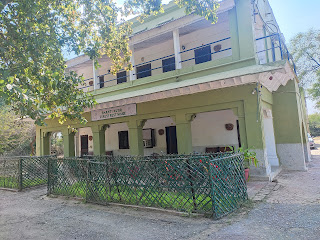
While passing slowly through Raigunge I decided to take a chance at the government tourist lodge in front of Kulik Bird Sanctuary. We have stayed here before. They had plenty of rooms available and we took one of the rear rooms facing the garden because the road facing rooms would be noisy due to the busy highway. Food at this lodge is simple. The AC and geyser both work flawlessly here. Monisha even used their kitchen fridge to store her cold drinks. 


The route from Calcutta to Kulik as recorded with the app Calimoto.

We proceeded towards Siliguri the next morning after breakfast. 

The next big bottleneck used to be Dalkhola, as I have explained before. Apparently the Dalkhola bypass is now ready. It indeed is ready, or at least one side of it, to the extent that the bypass lets you cross the major jam area of the level crossing. However, at least 2/3 kilometers of the road from the place where the bypass ends to the T-junction and beyond is in terrible condition. 

The unfinished parts are not much when compared to the full distance. However, I am mentioning those parts because small cars with low ground clearance will find it difficult not to scrape their bottoms.

Those who are used to the GQ will find this road quite unfinished. The real finished part is the Malda bypass. It is complete in all respects. I think l paid some Rs 1000 in toll tax, possibly in six places. 

Before Bagdogra the road is a little incomplete where I took a wrong diversion and ended up being in Fasidewa. This turned out to be a bypass for Bagdogra and is actually a much shorter route to Siliguri. The road condition was excellent though it's a narrow road but without any traffic. 

Siliguri to Jorebungla to Lamahatta

I took the Hill Cart Road to go to Kurseong and onwards to Jorebungla and then turned right on Peshak Road to reach Lamahatta. Commercial drivers take the Rohini route to go to Kurseong. It's a 12 Km saving as I measured while coming down, when I took the Rohini road just out of curiosity. I quite love the heritage Hill Cart Road. They have concretised the Pagla Jhora Section now and hopefully the small spring is not a problem any more, even in monsoon.  

There is another route to go to Lamahatta from Siliguri. You drive towards Sevak and onwards to Teesta Bazaar/Peshak from where you turn towards Lamahatta. We did not choose this because Darjeeling hills to me is all about the old Hill Cart Road. I love it.

On the way up, we stopped a little outside Rongtong to have momos from a street side shop. It was a very pretty little shop in the forest with no one around. The Rongtong station area was quite crowded with tourists carrying huge birding lenses and cameras. That's why we did not stop there but pushed forward. 

After Rongtong, we stopped near Kurseong Tourist Lodge for tea. This is a heritage sort of stopover when you are going to Darjeeling. However, to our utter disappointment we found it full with tourists and were shown a waiting area where there were a few families already waiting ahead of us, which meant it might take us a long time to find a table. We beat a hasty retreat and went to the taxi stand instead where there is a tea and snacks shop called Zimba. We had two quick teas and pushed off. 

I must say - the quality of tea in the general street side shops used to be superb in Darjeeling. Nowadays it is no longer so. They sell very ordinary tea in these stalls. A few years ago they would sell authentic Darjeeling with full aroma. That culture, like all good things, is sadly gone.

Before Sonada but after Tung there was a massive traffic jam with vehicles stuck on both flanks of the road. In the mountains, as indeed anywhere else, you cannot do anything much about a jam. You just wait it out. That's exactly what we did. But I must say, the police constables are everywhere when there is a jam and they do their best to clear it up. It's not that everyone is on their own and there is a free for all. It's a very disciplined jam in the hills. 

The Sonada station looked in a terrible state of disrepair. The Gorkha agitators had once set this heritage station on fire. God only knows what level of illiteracy makes one destroy such heritage of one's own in the name of political agitation. I can understand even a political killing (though I do not support it). But I cannot understand such senseless destruction. Because it serves no purpose. The Sonada station did not harm anyone. The government also does not seem too keen to restore it. I think another station is also burnt out - either Mahanadi or Chunabhatti. I am not too sure.

From Jorebungla to Lamahatta is a 14 kilometer mostly downhill ride through the lovely Tukdah forest. We had gone as far as 3 Mile during our cycling trip in 2019 from where we turned right towards Mungpoo. Now, we went straight ahead and reached Lamahatta after 6 Mile, just before Lopchu.


The Return Journey    

We took exactly the same route to come down to Calcutta on Sunday, except that we chose to come down via Rohini just to check out the road. It's a boring new road sans the heritage value of Hill Cart Road. Of course Hill Cart Road is much narrower. Rohini also has very sharp switchbacks that a new driver should be careful about. 

On this route I love to drive with the train line next to me or playing hide and seek with me. Also, I love the little stations like Sukna, Rongtong, Tin Dhariya etc that you miss on the Rohini Road.

While I took two days to go up, I came down in a day, driving almost non-stop to reach home after 14 and a half hours. 

The Trip

This was our first road trip in a very long time. Since our daughter was born about 19 years ago, this was also the first time we were travelling without her. So naturally we were missing her. Although she just sleeps on the rear seat during the drive or is seen absorbed in her phone, we missed her presence. 

Lamahatta has nothing except an "Eco Park". We did not enter the park as it seemed nothing more than a manicured garden built in the middle of a dense pine forest. It was teeming with tourists, mostly Darjeeling tourists who came on a "sight seeing" trip here to tick Lamahatta off their list.

Instead we walked ahead towards Lamahatta Residency and found a wide forest trail on the right hand side. We walked for a kilometer or so along this path. It's a quiet trail where we saw only a Chestnut Crowned Laughingthrush but heard lot of other unidentifiable birds. 

I also walked up and down the concrete steps behind the tourist lodge where we saw a lot of birds. A grey headed canary flycatcher took up a lot of my time and attention. They have lots of crossbills here that often come to the watering hole that they have set up behind the property. There is also a hide of sorts where they store logs and one can photograph the cross bills from there. 

In terms of bird photography it was nothing much but the place certainly has lots of birds. I loved the quiet of the place and the general tourist-lessness of the area. The Eco Park attracts lots of low grade tourists. Their vehicles have nowhere to park. So they park along the side of the road often creating massive traffic jams. However, once again the traffic policing along the road was excellent.


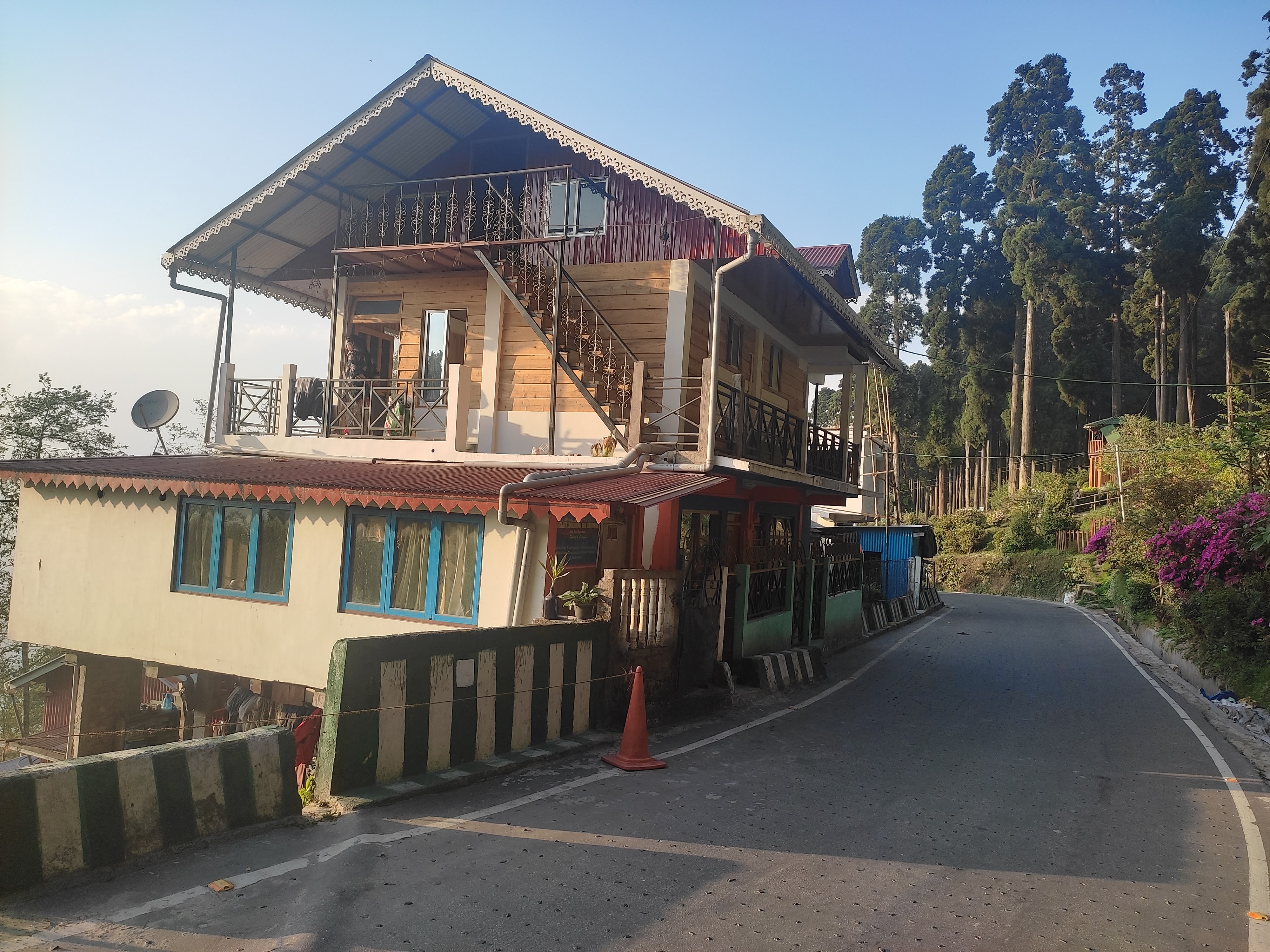
We were guests of Lamahatta Resort. But we did not have any room for ourselves there on the first night. So we were put up in the small hotel next door for the night while our vehicle stayed parked in the larger Resort. The hotel next door is called Kanchenjungha View. Its rooms were relatively small and they did not have any generator. Food was home cooked and ordinary. 

The standard menu of these homestays is rice, daal and chicken curry, which can be boring after a day. They charge on a per head per day basis inclusive of food. I think it is exorbitant pricing but this has become the norm it seems. 

The Lamahatta Residency looked and felt like a better hotel. Next time, if at all there is a next time, we will stay here. Because we were very disappointed by the kind of music that was played by the Resort on our first night there.

They played DJ and karaoke music for some guests - youngsters, presumably from Calcutta - who decided to have a bonfire coupled with uncouth loud music. The next day we decided to move out but then the hotel management promised that there won't be any more DJ music which is why we cancelled the plan. 

On Sunday we started from the hotel at 5 am in the morning and in an almost non-stop drive reached home in Calcutta at around 7:30, bringing to an end a delightful short trip. 


Monday, March 14, 2022

Deoghar On Motorcycle

Somewhere near Jamtara


Today is Monday 14th March, 2022. I am just back from a motorcycling trip to Deoghar. I went alone, taking advantage of the weekend when Monisha and Mampu went to Delhi for Mampu to join her university. 

The trip happened without any major incident worth writing about. But it's worth keeping a record of the experience for posterity or for others who might be interested to go there. 

I have been to Deoghar several times by road (either by bus or in my car). Every time I took the same route - via Bolpur, Suri, Massanjore and Dumka. This time also I went up the same route but took smaller variations within the overall route. And I came back via a totally different route, which is via Jamtara, Mihijam (Chittaranjan), Asansol and then the usual straight 4-lane highway. This used to be the old traditional route to go to Deoghar by road which I had never taken so far. 

The decision to experiment with the routes had mixed results that I will describe here.

On Saturday I started from the house at around 7:40 am. This is a little later than my usual time to start a long self-drive journey. But then I was alone at home and I was not feeling 100 per cent confident to go. I made my own breakfast of a pair of sunny side up which turned out to be perfect. Then finally, after some mental tug of war, I picked up the courage and went out. I have never gone so far in life with my motorcycle. My farthest till then was Santiniketan and Katwa a few times. Although I once did an up and down day trip to Santiniketan on the same day I do not think much of those rides. 

For the journey I chose to wear a pair of corduroy pants and a full sleeve corduroy shirt. This was to protect the body from the sun and dust. And the corduroy trousers is very comfortable for me. I carried very little stuff for the trip. Just enough to fill in my small red Deuter bag. And I took my waist pouch also. These were all kept ready the previous night.

Had breakfast at Shaktigarh with an omelette on toast for Rs 40. This is available in the small carts next to the lengcha shops. After Burdwan I took the Guskara/Bhedia road. When I first took this road with Chenku it used to be a dirt road with a fair weather bridge over Ajay. Now it's a proper asphalt road. 

At Kayrapur, which is after the level crossing, I stopped for the delightful ledikenis from a shop that I have eaten from before. Truth be told, one after the other I finished 5 of them for Rs 25. The shopkeeper was very keen that I taste his rosogollas but I promised that I would take them on my return trip. 

I was in two minds about the route to take from Bolpur to Suri. Via Ilambazaar or via Sriniketan? While the one via Ilambazaar was a little detour it's a wide road. The one through Sriniketan, albeit shorter, is narrow with innumerable bumps and goes through tight villages. 

The Kayrapur shop keeper told me I should take the Ilambazaar route and instead of going to Bolpur and turn left I should turn left from Guskara and come out at 11 Mile and then turn right towards Ilambazaar. 

This turned out to be a totally wrong advice. Basically he (and there was another old man eating kochuris who shared the same opinion in a very knowledgeable way) knows nothing about roads to take when one is self driving. They also do not have geographical idea of where exactly these places are relative to each other. I don't think they have ever seen a road map of the area. Their knowledge is based on bus rides and hearsay. This old man said Suri was closer via Ilambazaar than via Sriniketan, which is geographically totally wrong.

I had thought I would take the left turn after Ajay bridge and reach Ilambazaar through the forest after Kamarpara where Suvomoy has the house or Bana Lakshmi etc. The Guskara route appealed to me because it would be something new to explore. 

This was a major mistake. The road is in terrible shape. It crosses the very crowded Guskara station and the level crossing was down, leading to a mile long queue of vehicles perhaps. Next comes Aushgram, whose name I had heard several times before but never been through that area. The road goes through patches of beautiful sal forests but speed was very very slow due to the pathetic state of the road. Going via Kamarpara wouldn't have saved me on distance perhaps but the better surface of the road would've meant quicker journey time and I wouldn't feel so tired. 

The route from Guskara to Massanjore via 11 Mile, Siuri, Amjora Bridge

Anyway, I am fine with such experiments that do not always go right in life. We learn a lot of things through these failed experiments. No experiment in that sense is a failure.  

After 11 Mile the old ADB Road is still in fine shape. One by one I crossed Ilambazaar and Dubrajpur and was heading towards Suri. Here I started feeling a little sleepy. The road is flat and featureless. But when one is on a motorcycle there is no way one could take a short nap unless one found a shady large tree. I found no such thing. Stopped for a while. Drank water and then restarted. The sleepy feeling didn't go for a long time. I was thinking about the various dreadful accidents I know of that happened because the rider/driver had dozed off.

Presently I entered Suri. One has to cross a level crossing here. Some distance after that one turns left towards Massanjore. I remember the landmark for this turn as a building that had a huge football on its roof top. One could see it from a long distance. I asked an e-rickshaw driver about the route to Massanjore, that is, from where to turn left. He said why not take this new route via Amjora bridge? There is this new bridge over Mayurakshi and it cuts the distance substantially. I asked him is the road good? He said yes. The traditional route, he said, is at least 10 Km more.

I thought I would trust him and took this new route. In the excitement my sleepiness went away. It turned out to be a fine road. Desolate and narrow but that's fine. Finally the Amjora bridge came. It indeed is a spanking new bridge over the beautiful Mayurakshi. On the other side is Ranishwar which is on the old road that I wanted to take initially. I stopped here for buying water. Next came the beautiful Massanjore dam. 

One could enjoy the lake and its beautiful surroundings with hills and forests all the more because the road was absolutely billiard top. I wish I had taken a video of this road but I was getting slightly worried because it was getting late. I think it was already well past 2 pm. I spotted a "Mayurakshi Resort" here in White and Blue indicating it is possibly owned by the West Bengal government (google says no it is not). Have to explore it.

The road from Massanjore to Dumka is very nice through a forest and gentle undulations, as is the feature of roads in Chhotonagpur Plateau. I was very pleasantly surprised by the cleanliness of Dumka town when I entered it at around 3 pm. I remember a few very busy crossings from my previous drives through the town but this time Dumka presented herself as a beautiful little town with clean roads and no jam. Perhaps it has some dynamic District Magistrate eager to change things.

At Dumka
I stopped for a tea at a road side stall. It was a such a nice cup of tea, served in an earthen cup with a coarse texture which is a specialty of this area (possibly because of the high sand content in their local soil as opposed to our smooth soil of Bengal) that I took one more cup. 

Now I am on the last leg of my journey. Next stop is Deoghar via Basukinath. This turned out to be the worst road of the entire journey. It just does not exist. I mean the road. Just big loose stone chips on grey dust. And since it's a busy road the other vehicles in front are raising a huge cloud of dust through which one has to go. Thankfully from Basukinath the road improved and I reached Deoghar Tower at 5:44. Sunset was at 5:47 as per my new watch.

I could not recognise the Deoghar I entered. I had to ask the route to the Tower several times. This is unthinkable for me. But finally I reached and parked the bike in front of Hotel Yatrik. I was quite tired but relieved that the journey was over. I wanted to take a shower immediately. They said they have no room. It's all full !!!

I set off on foot to look for another hotel on the Station Road. Hotel Raj next to Ray & Company looked decent and they offered me an AC room for Rs 1600. I promptly checked in. No warm shower but that's fine. 

I had a plate of Paneer Pakoda and tea. The pakoda was very well made. After shower I went out on foot towards the temple. I am not a religious person. But I have some special pull towards the Deoghar Baidyanath Dham and the Kalighat temple. Perhaps it is to do with childhood memories and nostalgia. The stretch of road from the Tower to the entry point of the bazaar (where Gauranga Mistanna Bhandar used to be) has the look and feel of Benares's stretch of Gaudhulia to Dasaswamedh Ghat. I could recognise a few old shops like Hotel Neelkamal or Bata but many of the old shops are missing now. We had a small shop for buying stuff like biscuits or toothpaste etc that we call stationery shop run by a Bengali. He also used to keep the day's newspaper. That one has folded up. Gauranga is gone too. 

Tilkut was still being made on the street. This is a very old traditional crispy found in this part of the world. They make it with ram dana which is a corn. On the return journey from the temple I bought one for Rs 15. Very old nostalgic taste. 

What irked me the most about this walk through the heritage corridor of Deoghar was the sheer volume of the crowd and motorcycles in every nook and cranny of the town, not to speak of the cacophony they made. I realised that the cycle-rickshaw and tongas are missing, replaced largely by handmade and crude e-rickshaws. I asked an e-rickshaw driver. He said, you might still find a few old rickshaw pullers. Who wants to ride those slow vehicles?  

I walked on till the temple. The shops that sold skillets and other cast iron utensils from where my mother always bought something or the other every year are still there. But the stuff they sell have become more glitzy. The glass bangle shops are all still there. But the small shop that used to sell wooden toys (possibly from Bhelupur) for children is gone.

Our old peda shop is still there. The old owner (he used to be Kochika's classmate) is a photograph on the wall. That the new owner is his son does not need to be told. He looks more or less an exact replica of his father.  

The old beggar sitting under the arch of an old building looking after the sandals of people entering the temple is still there. I left my sandals in her care. I was not prepared for the change I saw inside the temple complex. People were sitting on the floor of the courtyard almost all around the temple. They were watching the goings on inside the temple on giant screens put up on the temple's main spire. Someone was chanting mantras over a loudspeaker and once in a while every one was shouting "har har mahadev" and raising their hands in the sky. Some were taking photographs of the giant screen with their mobile. It was plain disgusting. 

I had planned to go to the Nilkanth temple to see our family panda - Jatadhari Gajanan (he is long dead but his clan is still there) - but it seemed impossible to get there through that crowd of audience. I rang the huge bell a couple of times and decided to call it a day. I saw a huge queue of people who wanted to enter the temple's sanctum sanctorum. They were in a cage of sorts, to maintain queue discipline.  I cannot imagine going through this to see an idol. I came back defeated and disappointed by these changes. Deoghar temple was never a quiet little place. It always teemed with people. But this was shocking.


I had wanted to go to the temple the next morning but somehow I could not motivate myself to go there any more. Instead around noon, I walked to Naulakha Mandir. This was another annual pilgrimage we used to make in our childhood. After a 2.5 Km walk I found the Balananda Ashram was closed. I was told that it is closed since Covid broke. I walked further for the temple. I couldn't see it. I asked someone. He showed me a side lane. The front gate was closed and entry now is through the back door. It was closed in any case. It would open at 2 pm, they said. I got a clearer view of the Naulakha temple now. It looked shabby with black fungal growth on the temple's top spires. It looks terrible now. Like an old abandoned lady who has seen prosperous days in her youth but is now struggling to make ends meet. I really felt sad by what I saw. 

This used to be a sparkling clean and quiet temple with a lot of grace and peaceful surroundings in a beautiful garden. Adjoining it was the Balananda Ashram. Both were closed for me. I traced my footsteps back to the hotel.

There was an old stately building in front that was lying vacant. I remember this building. It belonged to some Bengali but now obviously no one lives there. Took a few photographs only for memory's sake.

The Deoghar that I saw had no resemblance whatsoever with the Deoghar of my childhood. I do not expect it either. But the kind of changes that have happened are all for the worse and shocking for me. In the evening Babu-da and I had a telephone chat over these issues. He is probably the last Bengali who still maintains his house from Calcutta. He said that was possible only because he had a roaring practice in the High Court. A frank and honest confession. He still donates money to the Bengali library near the station. I think RN Bose Memorial Library. 

I came back on the morning of Monday, starting at around 7.30 am after a small breakfast of two boiled eggs and a few slices of breads. The hotel's kitchen had still not become fully functional. I had taken two boiled eggs for the road the previous night. In the morning I filled up the tank with 9 litres of petrol from the pump opposite to the Bengali library. I had a small fear about pulling the bike up the basement parking lot but I cleared the slope without any problem whatsoever. Going down was more challenging. One small tip for such steep slopes. Never use the front brake while going down. Try not to use any brake at all while going down. If at all, use very light brake on the rear wheel only. 

Return via Jamtara and Asansol

On the return journey I went towards Sarath. This is past the Naulakha temple along a well maintained road. There is even an airport on this road now. But here one can see those vast patches of nothingness up to the line where the sky meets the earth. This is not so easily seen these days any more. From Sarath one goes straight towards Chitra. The road from Sarath is narrow and not in the best state of repair. But I didn't mind. It's not as bad as the Dumka Deoghar Road or the Aushgram one. After Chitra one goes towards Dehri Chowk and turns right. From here the road is nice and reaches Jamtara soon.

This route avoids going through Madhupur or Karmatar, which used to be the old motorable route to Deoghar. 

I was curious about Jamtara, having heard so much about its reputation as the phishing capital of the country. I expected to see some evidence of it in the form of large buildings and affluent looking youth. I found nothing of that sort. Just another pretty little Jharkhandi town. I went past it through Mihijam and hit the highway soon. This place used to be sleepy a few years ago and called Chowringhee Morh but now has a huge flyover. If you go straight you reach Niyamatpur. 

I turned left and continued through Raniganj, Panagarh, Galsi, Burdwan etc to reach home at around 3.30 pm - a total of about eight hours, as opposed to the ten hours it took while going. 

On the way I had only a tea near Jamtara with a jilipi. Both were terrible. Near Dankuni I had another tea and finished off the two boiled eggs I had brought from the hotel. I didn't stop anywhere on the way because there was just no shade anywhere. I had meant to stop at the Nag Hotel in Panagarh but then later realised that there is a flyover over there and unless one enters the town one cannot go there any more. 

With a heavy heart, I must admit that this was probably my last visit to Deoghar. The Deoghar I knew does not exist any more.

 Let me write down the basic distances 

Starting Point (Home) - 3716 Km

Deoghar Tower (Destination) - 4076 Km

Final Destination - 4408 Km

Distance via Massanjore/Dumka - 360 Km

Distance via Jamtara - 332 Km 

Total Distance - 692 Km 


Tuesday, March 1, 2022

Birding In Rajasthan

Kahi dur jab, din dhal jaaye. Sunset at Bharatpur.


March 2, 2022: Recently I had a short and quick 5-day trip to Rajasthan with Suranjan and Arijit. It was a very fruitful trip in terms of wildlife sightings, in company of two of the most wonderful friends I have. In those four days (one day spent in travel to Jaipur) we saw everything we wanted to see. Pelicans and a python in Bharatpur, Indian skimmers, black bellied terns, gharials in Chambal near Dhaulpur (locally pronounced as Dholepur) and even a wild hare in Bharatpur at night. In Jhalana, which is right inside Jaipur city, I had my life’s first leopard sighting in the wild. It was a mating pair. They were copulating when we arrived there. I couldn’t expect anything more from one such short trip.

On the non-birding front, I had some of the most delightful jilipis in the world at a snack shop in Jaipur. Will have to find out the location and name from Arijit for future trips. It was from out of the world.

The Journey – On Wednesday, 16th February, 2022, I took a taxi to AMRI to hitch a ride in Suranjan’s car to the airport. He is a chest physician in that hospital (in case you do not know). His driver drove us to the airport, while Suranjan polished off three cigarettes. I was a little apprehensive about the airport protocols during these pandemic times. However, I found no one checked any of our vaccine certificates or any declaration form etc. We breezed through security without any incident except that Suranjan briefly lost his made in Denmark watch. It was retrieved from the security area after some 10/15 minutes of frantic search by the CISF security personnel. They even scanned his bag to see if it got lodged in some corner. Turned out it had slipped off the tray while being loaded on the rollers.

Anyway, these are small roadblocks when one is travelling with Suranjan. He is known to have left his camera bag in taxi (which he got back), stamped boarding pass at security point etc.

Ready for the trip

The flight took off in good time and we arrived at Jaipur with plenty of day light left. Arijit was waiting at the airport and we reached his home in about ten minutes. At Jaipur airport they checked our vaccine certificate when we were about to come out of the airport.

Arijit’s house is in a complex of small exclusive houses for other senior forest officials. Arijit, an IFS officer, incidentally is a big boss in the forest department of the state. I do not know his exact designation but we get VIP treatment whenever we travel with him. Once in Tal Chhapar the local DFO came driving some 200 kms in his beacon fitted jeep just to say hello to him. So he must be pretty high up. But he is one of the most unassuming  and affable government officials I have ever known. An officer and a friendly gentleman of the first order. From the state's chief minister to the forest guard every one seems to like him.

Suranjan at Jaipur
His house in Jaipur overlooks a lovely large lawn with wild bushes behind. It’s a common lawn cum garden for all the occupants of all the buildings in that complex. It attracts plenty of birds including some pea fowls near the water tank kept in the garden. The other residents gather at the lawn in the morning to watch birds and have their morning cuppa. Arijit’s Man Friday is a young guy called Ravi. He is from Dausa, which is nearby on the way to Bharatpur/Agra. He cooked for us and gave us tea etc. A very nice, quiet and efficient boy with a slightly effeminate voice.

In the night, after unsuccessfully trying to sleep next to a mildly snoring Suranjan, I discovered another empty room in the house with a cot and mattress where I slept alone peacefully. Arijit has three such rooms and a large living area where we ate. He has an aquarium in every single room. The main one in the living room is very well planted, mostly with crypts.

Bharatpur - Next morning, we left for Bharatpur in a white Mercedez SUV. It belongs to one of Ariit’s friends. The bearded driver was Vijay, yet another soft spoken and courteous Rajasthani. We took breakfast somewhere on the way after Lalsot. Alu Paratha with raita, achar and butter. The tea after this was terrible. The tea leaves in question were perhaps factory sweepings. The old waiter was extremely perplexed to know that we neither wanted milk nor sugar nor any ginger or lemon or anything in our tea. He even asked incredulously "what is the meaning of such a tea, sir?"

We reached Bharatpur’s Shanti Kutir in good time for lunch. There is nothing much to write about the Jaipur-Bharatpur road. I have driven on it a few times. It's a four laned road that ultimately goes to Agra via Fatehpur.

Three of us at Bharatpur


Soon enough we saw some pelicans (both rosy and Dalmatian) and all that Bharatpur is famous for. I noticed that the spoon billed storks were conspicuous by their absence (later we saw just two of them). But we saw a family of Saras cranes. The parents and a little one. Not so little any more though but its head was still brown. We also saw a huge wild boar that looked menacingly at us.

Aptly named Shanti Kutir
I have been to Bharatpur two times in the past and on both the occasions we took the famous Saradarji rickshaw (Bharatpur has some 30 rickshaw pullers cum guides who are all sardars, possibly second generation Pakistani refugees). After this 2022 Gypsy safari with Arijit, I realised that on a rickshaw one does not get to see even ten per cent of Bharatpur. If you are not a forest department guest with access to a Gypsy, your best bet is hiring a bicycle and travel on your own, as many serious birders were doing. The rickshaw is for the casual visitor only.

That evening a friend of Arijit came down from Dehradun. Anoop Singh. Another IFS and Arijit’s batchmate but he is now the Director General of Forest Survey of India. He is a chemical engineer from Roorkie. We had a small adda session in the evening in Suranjan’s room where the local Bharatpur DFO (not of the park but of the district outside the park) came to say hello. The park DFO was travelling outstation. So he did not come.

Abhimanyu who is the district DFO is a young man who did his MSc in applied mathematics from Roorkee. He very politely refused to join us for the drinks on the ground that his parents in law were visiting him. Anoop tried to pull his leg for this, but he was steadfast in his decision.

Chambal near Dholepur
Dholepur, Chambal : Next morning the four of us – Arijit, Anoop, Suranjan and I went to Dholepur which is on the bank of Chambal river. Our agenda is to see the famous Indian skimmers and the Gharial. Although the skimmers can be seen in a few other places, for Gharials this is the only place in the world.

The road from Bharatpur was very nice through sparsely populated villages. The landscape is rather flat and green. We made a small mistake and went through Dholepur  town, which is not really necessary. The town has a palace that has been restored recently and is rented out at super premium rates. Vasundhara Raje was married (now divorced) to the king of Dholepur and her son manages the place. In case you do not know, she is part of the Scindia family and has been the BJP chief minister of Rajasthan for two terms.

The forest range officer of Dholepur was waiting for us by the side of the highway in front of his office which is basically a check-post on the highway. Just before the new bridge over Chambal river we turned right and went down towards the ghat where speed boats were waiting for us. The straight road crosses the river to go to Morena in MP from where one can go to Gwalior. In fact Chambal is the border between MP and Rajasthan. 

The two sides of Chambal were once the dreaded lands of dacoits. The small towns of Bhind, Morena, Ettawah (in UP) are etched in my memory as datelines of all the dacoit oriented news reports we used to read in the 80s. The dacoits are long gone but some of the local people still sport those dacoit-like moustaches. We saw a few of them.   

The river looks rather tranquil here with a big arc towards the right. In fact if you google for Chambal this is one of the shots that you get to see. There are a few sand spits in the middle of the river. Two boats were waiting at the sand bank. The river flows from right to left. There are two bridges on our left-hand side. The older bridge is abandoned now. There was a forest department tent. I don’t know if they pitched it for Arijit’s arrival.

We boarded a small open boat with a Yamaha engine and a canvas canopy on top. The sun can be very strong here despite the weather being quite chilly. Breakfast was loaded. Basically biscuits, dry fruits like cashews and almonds etc and not so dry fruits like grapes, apples and oranges. We were individually given life vests.

The boatman was a young guy called Munna (8619073416) who was extremely knowledgeable about both animals and camera angles and sun light etc. He took us to see the Indian skimmers first which were there on the sand bank across the river. But before that we saw a pair of Brahminy ducks close to the river bank. It’s one of the closest sightings for me of this particular species (I have seen many of them in various places but never this close). I got some delightfully close shots of the bird from eye level. Brahminy duck is one of the noblest looking animals in the world. They look dignified and quiet. The male has a round black ring around the neck. The colour is gorgeously ruddy. They are also called ruddy shelduck.  I believe they mate for life and if one dies the other circles around the place and falls dead soon.

Munna took us past a few sand spits to the other side of the river. The tiny islands (barely a few hundred square feet in area) either had a few large crocodiles or Gangetic turtles, not to speak of sundry little waders like river lapwing or thick knee etc. We were not interested in those but headed straight for the skimmers. There was a flock of around 25 skimmers on the sand bank on the other side (Madhya Pradesh) of the river.

In Sumit Sen's famous words stated in the context of some other bird - "they are very rare but if you go to the specific place where they are found they are easy to see". This is precisely the case with Indian skimmers.

Some of the skimmers were busy in courtship and didn’t care that we were close by. There were a few pratincoles too, but we almost ignored them. 

The ravine on the MP side looked more wild than on the Rajasthan side which was quite green. The water was very calm. We were told that Chambal is a river with the cleanest waters in India, there being no industry or major city on its banks to pollute it.

On the MP side of the river the guide showed us a couple of Egyptian vultures and a jackal. There was another owl but it was too difficult to ID it or even see properly (Govind Sagar Bharadwaj who went there the next day with his 500 mm bazooka id-ed it as Eastern Grass Owl, which is a rare bird to see). We moved further upstream and saw a few brahminy ducks and then came the gharials.

Chambal is famous for being their home. Dhritiman got a BBC award for his photograph of a mother alligator with a few babies on her head. Udayan Rao Pawar had got the same award in the junior section a few years ago with a similar photograph.

We saw crocodiles too. And we also saw a particular flying fish. They were indeed flying off the surface of the water for short distances.

All these creatures – the skimmers, the gharials and the crocs use the sandy banks to lay eggs here and propagate. I believe the sand is of the right grade for them to lay eggs. They require a particularly soft variety of sand to lay eggs.

The gharial is critically endangered and is not found anywhere else. There is another type of turtles called red-crowned roof turtle that can theoretically be found here. I believe they cannot be seen in the wild any more. There is an artificial propagation center for them somewhere downstream. But let’s keep that for some other day. We did in fact see some turtles but they were rather ordinary Indian Tent Turtle (Pangshura Tentoria).

Once off the river, we went to check out the forest check-post where they have made a decent bed room with a toilet. They showed it off to Arijit who appreciated the work. They offered us some samosas and kachauris. These Chambal samosas, I must say, are totally different from anything I have seen or eaten so far in life. 

After Dholepur we came back to Bharatpur and did some more birding in the second half. We were presently joined by Govind Sagar Bharadwaj a renowned Rajasthan cadre forester from HP, junior to Arijit. He is renowned for his photographic skills and I have been his fan for a very long time. He has a 500 mm tele that he carries around everywhere. 

In the evening we went to the hotel next door – Sunbird. It is apparently the oldest lodge in the town. It seemed pretty well kept and upmarketish. Suranjan had come and stayed here way back in the late 80s as a college student when this was the only hotel in Bharatpur. The owner, one Randheer Sirkaar, invited Arijit and Co for an evening adda and dinner. Arijit seemed to be the only IFS in Rajasthan cadre who this gentleman did not know.

At the evening adda session we heard the unbelievable and incredible story of GSB’s encounter with a tiger. I will write about it some other time with his permission.

When we were driving back to Shanti Kutir at around 10 pm we saw a white wild hare crossing our path. Again this is a lifer for me. Before this I had never seen a wild hare in a jungle and always wanted to see one.

Next morning was spent in birding in Bharatpur before breakfast and then after some heavy breakfast laced with dozens of delicious jilebis we went back to Jaipur in time for lunch at Spice Court near the CM’s residence. We had mutton bati and jungli drowned with beer. The bati seemed a little dry and the jungli was too hot. Bati is like an oversized gutka kachuri with minced meat inside.

Spice Court is a very decent place with a lawn of its own and a large dining hall. It has the look and feel of a golf or polo club. Indeed it has many polo related photographs on its walls.

I know of only Neros and LMB in Jaipur as eating joints. Now this is a new addition to that list.


Jhalana - We woke up early next morning to go and see leopards in Jhalana. This is a newly developed sanctuary inside Jaipur city that now hosts some 35 leopards. If you spend half a day there you have 70 per cent chance of sighting a leopard. We saw three actually. Again a lifer for me.

We boarded a forest department Gypsy from the gate of the park (officially it is still not a sanctuary or national park). Four of us - Arijit, SM, our driver and I. We also had a young doctor with us called Sourav Kalia. He lives close by and comes here often. He is quite well known in the birding and wildlife photography circle. Arijit had asked him to join us.

The first sighting, within virtually less than ten minutes of entering the park, was of a mating pair. We were the first to spot them. Day light had still not broken properly and it was not very well lit for photography. After a few attempts I decided to concentrate on seeing the sight rather than photographing.

Could I believe my luck? Having seen both the male and female together I could understand the relative difference in their size. It takes a lifetime for many to see this sight. Soon a few more jeeps arrived and they decided to move away.

The lone male leopard at Jhalana

We saw another male later, lazing on the forest floor. Photography here was possible with some patience. After this we spotted a desert fox busy digging a burrow alone. We spent a long time photographing it and watching its antiques.

We also saw a spotted owlet and a couple of nightjars, among birds, not to speak of rufous tree-pies. The  tree-pies were feasting on an old kill of a large deer (or was it a Nilgai?)

The day's trip ended with a visit to a kachauri-samosa shop with some of the most delightful jilebis I have ever eaten in life. I think I ate a humongous amount of them, putting even Suranjan to shame.

We caught the evening flight from Jaipur airport and came home by 9 pm, ending a delightful short trip. Oh! I forgot to mention, on the return flight Suranjan lost his reading glasses, which unlike the watch, could not be retrieved. 

Here are some photographs from the trip for posterity

Desert fox - Jhalana, Jaipur


Dalmatian Pelican, Bharatpur


Monday, November 30, 2020

Black Baza in Bakkhali

 Yesterday, Sunday 29th November, 2020, I went to Bakkhali with my birding friends. A little past 5 am, when it was still quite dark all around, Partha, Suman Paul, Malay Mandal and Sanchita De came to my house in Suman's black Esteem. Camera bags were loaded in the boot of my Duster and off we went to Bakkhali. We were about half an hour late from my target time. Sujan was ahead of us in his car. We met at Bakkhali beach. 

We by passed Diamond Harbour and went via Sirakhol, Usthi and Hatuganj which is our usual route for going south of DH. This  road was in a terrible state of repair with huge craters right from Shirakhol to Hatuganj. In places trucks were stranded in the middle of the road with broken axles - obviously result of the deadly combination of illegally heavy loads and bad roads. On the way back we avoided this road and came straight through Diamond Harbour town. It was smooth sailing all through. 

On the way up to Bakkhali, we stopped at a place for coffee and sandwiches. Sanchita had brought them from home. They were delicious. We must have her in our team in future for her culinary skills alone.

In Bakkhali we parked in the official parking lot past the West Bengal tourism complex and immediately went to the beach. We moved to the left (east) and soon met up with Sujan and his team. He had come with Sandip Das, Bhaskar Banerjee and Tapasi Das. Except for knowing Sandip a little, I didn't know the other two at all.

Sujan told us there were a few Amur Falcons in the vicinity and we should watch out for them. We soon saw two of them. 

There was one channel about 50/60 feet wide, parallel to the shore that had about 2 feet water. This was low tide time and water was receding. In the distance we could see hundreds of gulls where the beach ends and the sea starts. Sujan and his friends waded across the water body and went to check out the gulls (mostly Pallas's and Brown headed etc).

We saw the gulls in the distance take flight as if they were disturbed. 


Monday, November 23, 2020

Sunderban With Friends

I have been to Sunderban a number of times. Normally we do a day trip. Go early in the morning to reach Gadkhali at around 7.30/8 am. Park the car there. Get into the boat right away. Travel the whole day. Come back to Gadkhali by night fall. Reach home by 10 pm. I had stayed there only on two occasions. This time when Suranjan organised it, he made it a point to make it a 2 nights and three days affair. 

We would start Friday morning (6th November, 2020). Reach Gadkhali as early as possible and travel the entire day in the tiger reserve. Come back to a hotel in Dayapur to spend the night there at a resort. We would travel the next day the whole day in the tiger reserve and again come back for the night to Dayapur. On Sunday also we travel the whole day but by evening we go back to Gadkhali from where we go back home. It is hectic but with friends it is doable. After all we need not walk or sit still in a vehicle.

The arrangements would be done by a guy called Surajit Sarkar (9007820752) who runs a nature travel and tour company called Ichhe Dana (we organise the day trips ourselves). So we need not bother about anything like driving our own car or hiring the boat, food, guide, organising the hotel etc. Despite my initial skepticism and cynicism, Surajit turned out to be a nice affable guy. He is fairly knowledgeable about birds and animals, being a photographer himself and he also seemed to know Sunderban fairly well. He charged us Rs 13,000 per head for the entire trip, which I think is quite reasonable. If I was planning a similar trip I would ask Surajit for help. I can quite endorse the guy. But he doesn't seem very business savvy, which might be bad for his business, in the long run.

The Innova picked us up one by one, starting with Suranjan. I was the second to get in followed by Sumit. Next to be picked up from Peerless hospital was Sujoy Bala. Partha meanwhile came to Metro Cash & Carry from where he got into our car. Shyamal dropped him there and drove back. This was my first trip with Sujoy. He turned out to be a very nice and friendly companion, though much junior to us. I was the only non-doctor in this group. But by now I have got quite used to the endless chats about Calcutta's medical malpractices, discussions about various wrong procedures and treatments done on hapless patients by other doctors, and of course the various CNMC student or professor stories. If I wanted I could easily bluff my way out of any situation where I needed to prove that I was a student of CNMC from mid-80s. The four of them were equally divided between CNMC and CMC.

We had one small tea break on the way to Gadkhali after Baruipur. The car did not have enough boot space for the luggage of all 5 of us. Each had a camera bag and a medium sized suitcase. But Sujoy was very accommodative. He sat on the last row with the rest of the seat stuffed with the suitcases. Partha was also very accommodative and took the hopeless middle seat without a grudge.  

We reached Gadkhali in good time, despite the terrible road conditions after Canning. After reaching Gadkhali we got into the boat right away and the journey started in right earnest. We all noticed that the boat had an unusually quiet engine. By Sunderban standards it was almost quiet.

Those who may not know about Sunderban - during the first hour or so from Gadkhali the launch travels through inhabited islands. This part of the journey is quite boring for us. There is no trace of any forest here. Gosaba island is on your left hand side and Bali island is on the right hand side. You might see some birds on the banks but no chance of any tiger or crocodiles here. We saw several Pacific Golden Plovers and a striated heron on this stretch. I tested my camera and realised that some error was being caused and the camera was asking me to switch off and on again. This was working for a short while and again the problem would crop up. This problem persisted for the entire duration of the trip. The camera was trying to get back at me for not using her for such a long time. The problem hasn't recurred since I came back. I think I will just have to shoot with it more often. Somewhere during this journey through the inhabited islands the two guides got into our boat. I had noted down the number of Himangshu Mandal because he stayed with us for all three days. 

If you are curious about village life in Sunderbans you might catch some glimpses of the villagers going about their daily life. Mostly you can see people walking or cyclings on the roads on either side of the river. You might even see a family getting into a boat to go to the other side. Fisherwomen can also be seen catching "min" with their nets. Life looks boring and dull. These are also the villages - you must know - from where a very large number of unsuspecting young girls are unfortunately trafficked to the red light districts of the country. But that's another story for another day. We will not talk about sad stories of human existence. We will talk about nature, birds and tigers.

We entered the reserve forest at around 11 or so. The reserve forest is on the other side of the huge river Bidyadhari. Here there is no question of any human habitation. This is a huge area of small delta islands criss-crossed by river channels. Some are wide while some are narrow. The reserve forest area has some rules. The launch as well as the passengers need to have permission from the forest department. This was done in advance for us. During the journey the engine of the launch cannot even be switched off and the launch cannot be kept stationary anywhere. The launch can only cover the wider rivers and not enter the smaller, narrower channels. 

What are the chances of tiger attacks on the launch? Extremely unlikely. There is no known history of any tiger attack on a tourist launch in Sunderban. Because tigers cannot jump out of water. Do the tigers come to the villages? No. The sides of the forest facing habited islands are all covered by strong nets. Tigers cannot cross these nets. Since this practice was started there have been very few tiger attacks in the villages. They have happened only when storms have destroyed the nets. 

Then how do so many humans get killed in Sunderban? 

The villagers enter the reserve forest in small hand pulled dinghy to collect crabs which have very high market value. A few successful trips can make you rich enough to afford your own house. This activity of entering the reserve in small manual boats is completely illegal. So they take the chance and enter the small rivulets and channels. These are so narrow that the tiger can jump from the land and grab at least one human. Some survive the fight (I once met a guy who survived a fight with cut marks all over his body) but most cannot fight back and are therefore killed.  

There is another legal way to enter the forest. That is to collect honey. I do not know how it can be legal but apparently it is. Groups of eight nine people are allowed in during certain seasons by the forest department. Tiger attacks on such teams is also quite common. 

The boatmen and the guides all told us that the urban conception that poverty drives the people of Sunderban to take such high risks with their lives is completely wrong. It is greed that drives these people to take such risks rather than poverty, they said. No one is so poor as to not have any other means of livelihood. I am quite ready to buy this theory because these people who go to catch crabs are not employed by anyone. They are all entrepreneurs. No one would take this risk for someone else driven by poverty. We love to believe that poverty is the root of all our miseries. I think lifestyle, greed and lack of proper education is the root problem of many of our miseries. Of course they are not a very affluent society but not so poor as to risk dying for food.

Our first day's safari yielded nothing much but the usual suspects. A few crocodiles (you get to see crocs only if there are less boats and this time due to covid there was hardly any tourist boat), a few black capped kingfishers, collared kingfishers, lesser adjutant storks etc. The big cat eluded us once again. We saw some waders also. Our wish list had white-bellied sea eagle, fishing or jungle cat (preferably both), brown winged kingfisher, peregrine falcon and of course Dakshin Ray - the other name for tiger (villagers don't normally take the name of dangerous animals - they say Dakshin Ray for tiger, or Lata for snakes etc). 

Actually seeing a tiger in Sunderban is a rare privilege and happens purely by chance. It should be on the radar of everyone. You cannot do anything special in Sunderban so that you are guaranteed to see the tiger. You just need to be in the right place at the right time. Lady luck has to smile on you. There is no guaranteed spot, there is no strategy, nothing. It just happens or does not happen. I know people, including very famous naturalists, who have been to Sunderban more than 40 times and have spent days on end yet haven't seen a tiger. Dhritiman Mukherjee, the famous internationally awarded wildlife photographer, hasn't seen one since 2006. 

Arrangements for food in Surajit's boat was grand. Breakfast was luchi, tarkari, boiled eggs and bananas. Lunch was rice, daal, prawn and fish curry. All cooked brilliantly well on board by a cook from Gosaba. 

By sun down we came back to Dayapur and anchored the boat near the hotel. Riverside Hotel. It is a large sprawling resort with two large buildings for rooms and a separate office building. We were allotted three rooms for the three of us. I chose to be alone. Partha and Sumit took one room (they work in the same hospital) and Sujoy and Suranjan took another room. My room was in a different building where I was the only occupant. There were few other guests but the resort was definitely not fully booked.

I thought the room was decently large with a nice bathroom. The geyser was good. The resort had good physical infrastructure but the people were very unfriendly it seemed. Untrained locals. I took a long hot shower and went to Partha's room for the evening party where we had an authentic Russian Vodka brought by Partha. Surajit had sent a large container full of chilly fish to go with the Vodka which like the morning breakfast and lunch was absolutely delicious.

We had our dinner cooked by Surajit's cook in the boat. We retired for the night at well past 10 pm to wake up early next morning so that we could go out by 5 am.